
Daily
Five rounds for each category and date, with the date following your time zone. Finish a set to record your result. Returning tomorrow brings another set; older published dates remain available through Past Games.
Play today’s fivePAST GAMES · TUESDAY, OCTOBER 27, 2026 · DOESN’T COUNT TOWARD YOUR STREAK
Recognising an object and judging its size are different skills. Sizekin puts a measured reference beside a silhouette you control. Adjust the target, submit your estimate, and use the reveal to see where your sense of scale needs a second look.
Two selected animals, measured in the same direction.
Our example starts with an emperor penguin recorded at 1.2 metres tall. The selected male red kangaroo is 1.6 metres tall: one penguin's height plus another third. The comparison gives you something more useful than an isolated number—a reference you can picture.
These are the values selected for the entries, not identical measurements for every member of either species. In a real round, check the name, qualifier and measurement label before making the silhouettes look right together.
01 · FIND THE REFERENCE
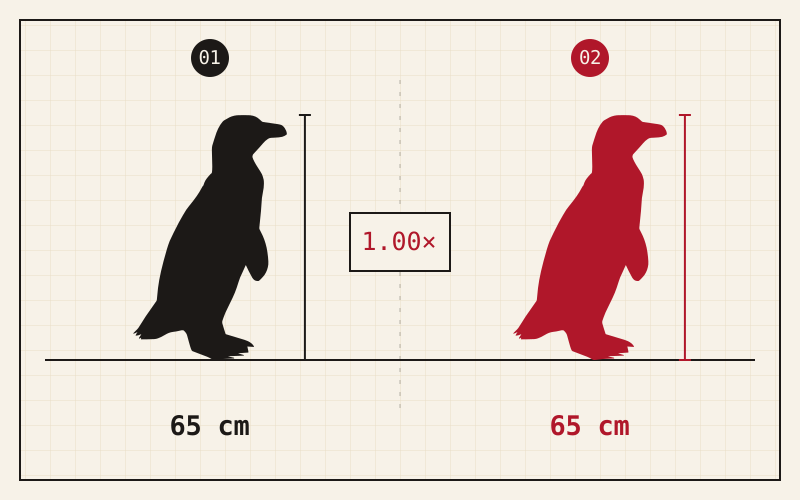
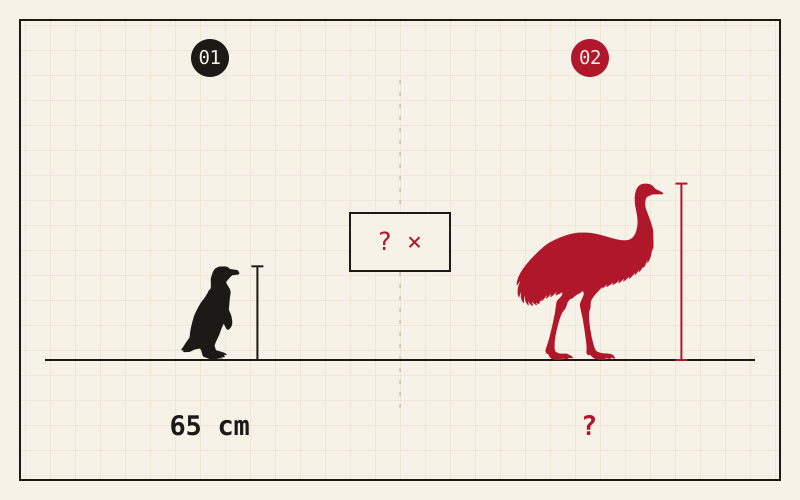
Read the dark silhouette's marked measurement. Decide whether the question concerns length, height, width, diameter or wingspan. The target is judged against that dimension, not against the area it fills on your screen.
02 · SET A PROPORTION
Start with a rough multiple: shorter than the reference, about equal, or several times larger. Drag or use the ruler to refine it. On touchscreens you can pinch to adjust the target; use the separate zoom controls when you need more room to see.
03 · CHECK YOUR ESTIMATE
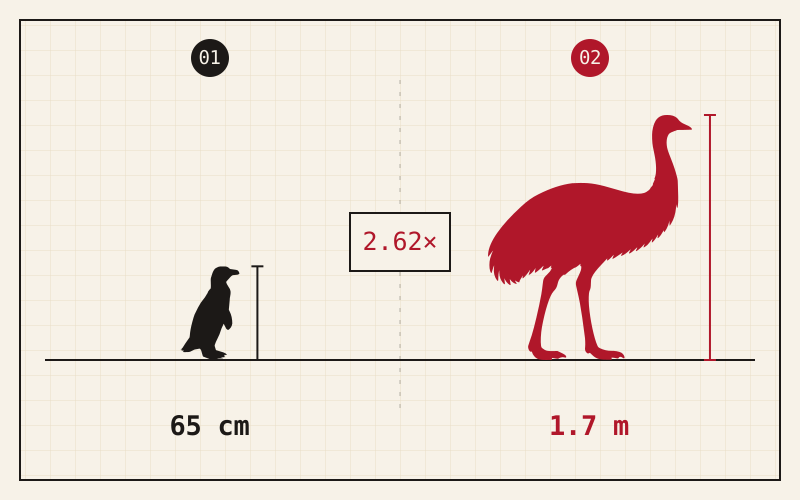
Lock in when you are ready to commit. The reveal compares your estimate with the stored measurement and shows the resulting score. Take a moment to identify whether the miss came from the scale, the unit or the endpoints you imagined.
The score measures multiplicative error. Guessing twice the recorded size and guessing half of it receive the same base points. Each Daily round has a weight, so the five base scores combine into a total out of 1,000.
When a run is complete, you can save its result image or create a share link. A challenge link gives a friend the same questions. Choose what to share after checking the preview; a revealed round can include the answer.
Read the measurement guide before trying a different category.
Five rounds for each category and date, with the date following your time zone. Finish a set to record your result. Returning tomorrow brings another set; older published dates remain available through Past Games.
Play today’s five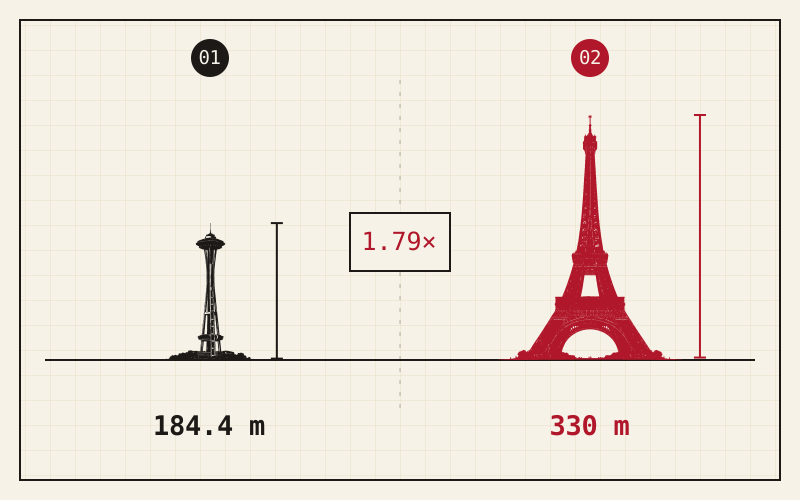
Choose 5, 10, 20 or an endless run. Practise a selected category without replacing your Daily progress. Recent objects are avoided when the category has enough alternatives; an endless run can finish after five rounds.
Play unlimited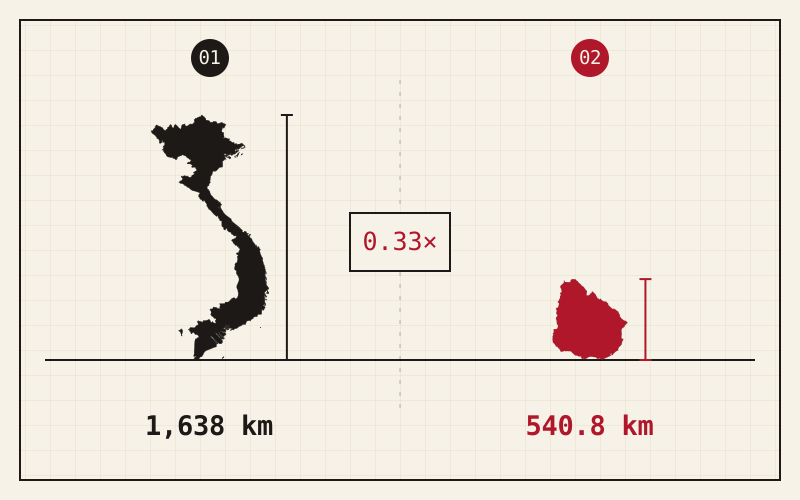
Compare countries by their marked span. Check the direction and included territory before adjusting the outline.
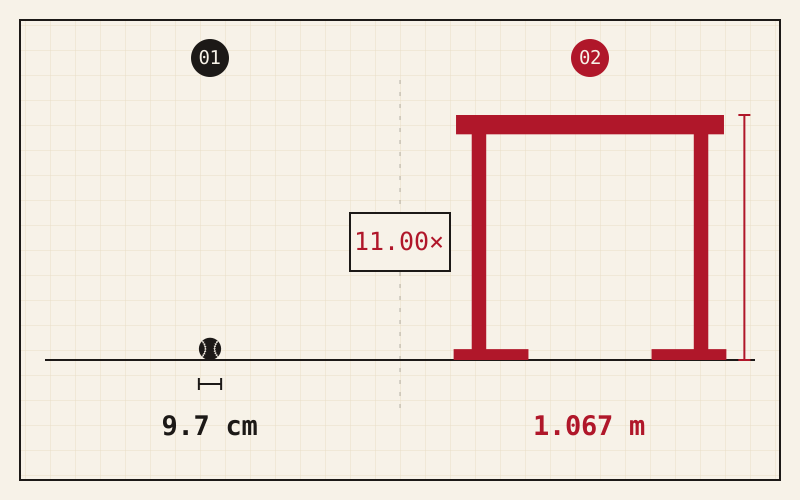
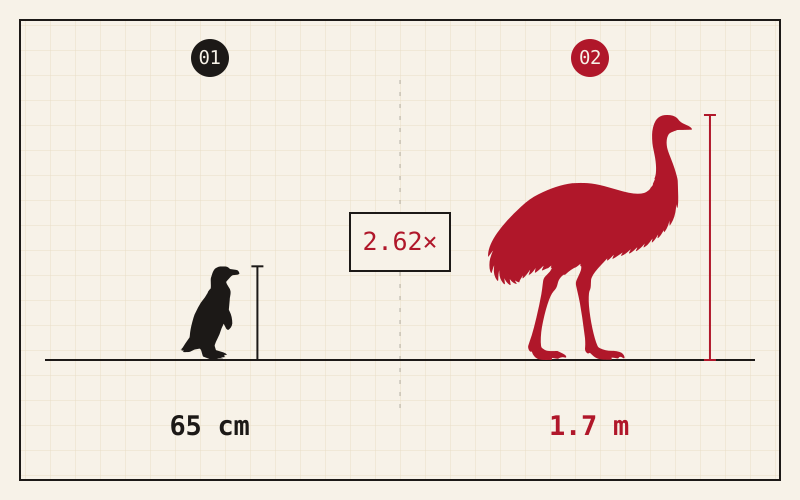
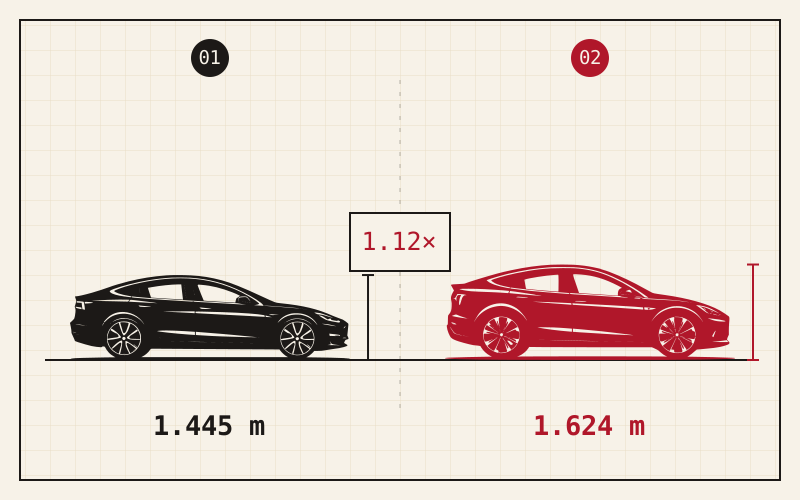
Play geographyThe examples below use selected library entries. Their bars compare one linear measurement at a time. They are reference notes for learning, not predictions of which pairs will appear in today's puzzle.
1.33× the height
1.54× the length
1.07× the diameter
A useful reference is something you can picture and describe precisely. Instead of memorising many unrelated numbers, connect one new object to one you already know. The comparison remains useful even when the next question uses a different unit.
When an answer surprises you, check the wording before changing your intuition. Height and length are not interchangeable, and a specific model, specimen or product size can differ from the generic object you had in mind.
The library keeps measurement notes and source credits with each entry. It also distinguishes objects available for new games from retired entries retained for older results. You can inspect that context and send a correction through the feedback page.